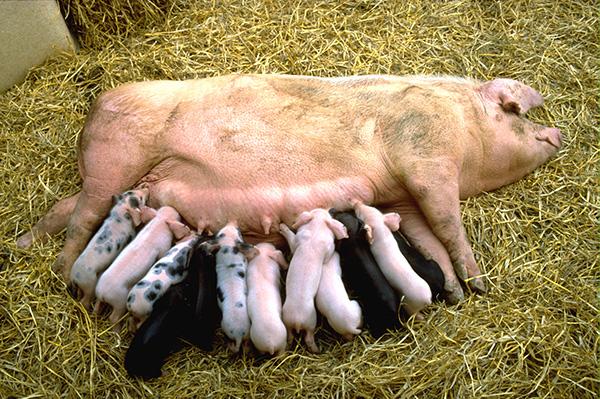
Through this short critical reading text designed for upper primary, pupils see how Jessica and Emma have used the scientific method to answer the question: "Does the type of home affect piglet play or fighting?" Created by the Easter Bush Science Outreach Centre |...
Read about Real-Life Science | Do Rats Like Being Tickled?
Through this short critical reading text designed for upper primary, pupils see how Tayla has used the scientific method to answer the question: "Do Rats Like Being Tickled?" Created by the Easter Bush Science Outreach Centre at The University of Edinburgh.
Read about Real-Life Science | Hunting for Bacteria in Sheep Lungs
Through this short critical reading text designed for upper primary, pupils see how Laura, a microbiologist, has used the scientific method to look for bacteria in sheep lungs. This resource was created by the Easter Bush Science Outreach Centre at The University of...
Animal Behaviour Toolkit – Opening a Can of Worms
In this teacher toolkit, we will provide some examples of investigation topics, give you some tips on how to support your learners and give you the opportunity to create your own investigations with your pupils. This resource was created by the Easter Bush Science...
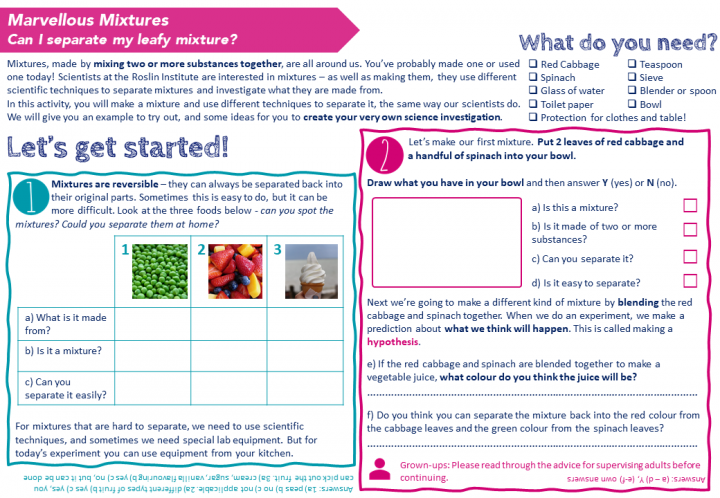
Science @Home | Marvellous Mixtures
Use this Science @Home investigation to explore the question "Can I separate my leafy mixture?". Download the workbook, follow the instructions and build confidence in using the scientific method. Don't forget to collect a certificate! Created by the Easter Bush...
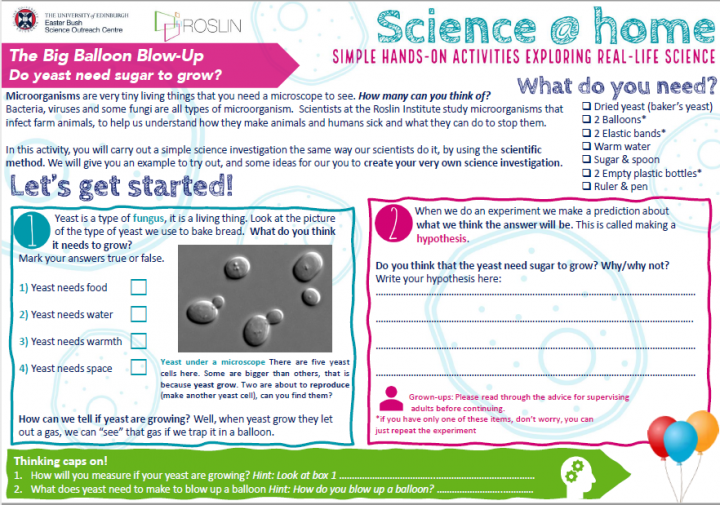
Science @Home | The Big Balloon Blow Up
Use this Science @Home investigation to explore the question "Do yeast need sugar to grow?". Download the workbook, follow the instructions and build confidence in using the scientific method. Don't forget to collect a certificate! This resource was developed by the...
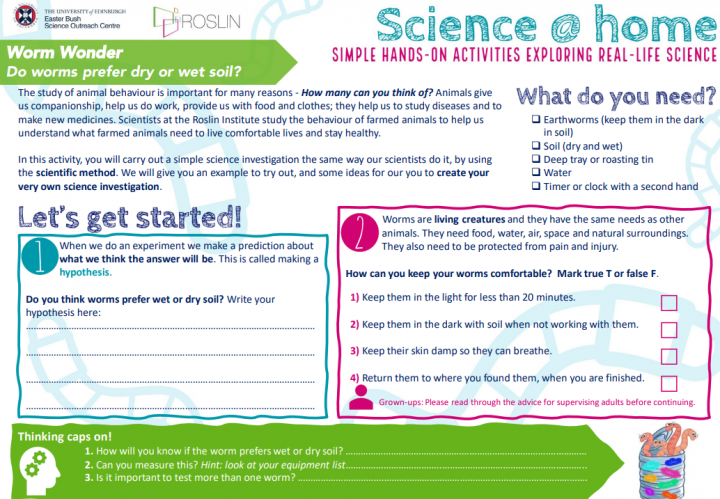
Science @Home | Wonder Worm
Use this Science @Home investigation to explore the question "Do worms prefer wet or dry places?". Download the workbook, follow the instructions and build confidence in using the scientific method. Don't forget to collect a certificate! Developed by the Easter Bush...
Have Fun with Maths
This is a collection of resources for P5-S3 students, aimed at developing problem solving and mathematical thinking. The resources focus on strategy games, and touch on applications of Mathematics to the context of transport systems. They contain a range of games and...
Project Soothe
The resource provides a collection of wellbeing tools designed by young Citizen Scientists aged 10-21 years old. Children and young people are invited to test these wellbeing tools as young Citizen Scientists and to use them as self-help tools at their leisure. Children and young people are also invited to submit their own soothing images to the Project Soothe’s database which will be displayed in a gallery on the website.
Edinburgh Maths Circle
The Edinburgh Maths Circle is an opportunity for children aged 5 to 16 and their families to join us for an afternoon of fun and stimulating hands-on mathematics. This post gives you instructions to sign up to the mailing list to be notified of future events.
The April Maths Circle has been cancelled due to the current situation.
If you would like to be notified of future Maths Circle events, you can subscribe to the Maths Circle mailing list. To do that, please send an email to sympa@mlist.is.ed.ac.uk with no subject, and text:
SUBSCRIBE edinburgh-maths-circle Name Surname QUIT
You will then receive an automatic email, asking you to confirm your subscription.
If you need any further information, please contact Francesca Iezzi by phone (0131 650 5842) or email (francesca.iezzi@ed.ac.uk).
Teach Computing Science: A guide for Primary and Early Years
Authors: Kate Farrell from Computing at School Scotland, Professor Judy Robertson from the University of Edinburgh, Professor Quintin Cutts from the University of Glasgow and Professor Richard Connor from the University of Stirling. This is an accessible guide to the...
Maths Trail: The Meadows
This resource is a maths trail suitable for an older Primary or younger Secondary school pupil, suggesting mathematical questions that they could think about during a (socially distanced!) walk around The Meadows in central Edinburgh.