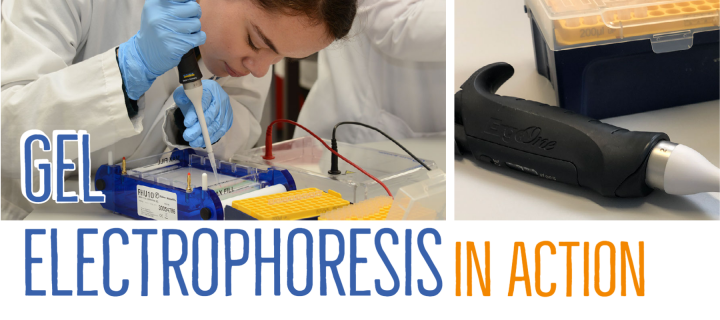
DNA Gel Electrophoresis Wall Tank

DNA Gel Electrophoresis Wall Tank

This photocopiable resource has been developed by the Easter Bush Science Outreach Centre to help support teachers who are teaching the theory of gel electrophoresis.  Gel electrophoresis is a technique used in the lab to separate DNA fragments of different sizes....

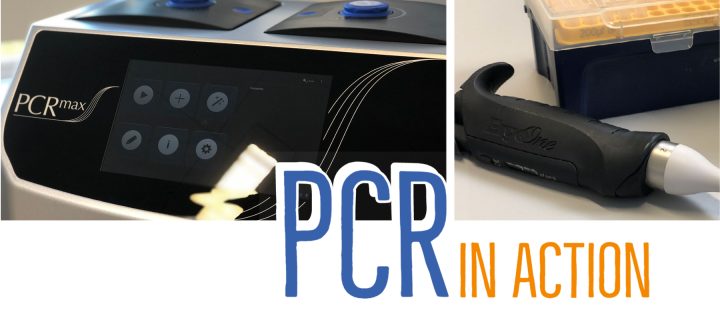
Lab Techniques in Action ¦PCR

Lab Techniques in Action ¦PCR

This video, created by the Easter Bush Science Outreach Centre, has been designed to support Higher Biology and Higher Human Biology learners to develop their knowledge and understanding of PCR.

AI and sharks! Machine Learning for High School Students

AI and sharks! Machine Learning for High School Students

How easy would it be to train a computer to tell the difference between a dolphin and a shark? How does machine learning work? If you have ever wondered, or if you are teaching Higher level students in secondary school, you'll love this set of lessons from School of...

Past paper explorer for History exams

Past paper explorer for History exams

A group of University of Edinburgh students are so enthusiastic about developing tech solutions to help teachers that they spent their Christmas holidays working on a prototype tool to help pupils with exam revision. In collaboration with Katie, a Scottish history...

Data Education in Schools

Data Education in Schools

The Data Education in Schools team brings together leading educational researchers, professional learning and digital skills consultants, and business development expertise working towards a vision of improved data literacy across Scotland. We are part of Moray House...

Stacking rings – Mental health risk and resilience

Stacking rings – Mental health risk and resilience

A stacking rings activity to stimulate conversation around risk & resilience.

Our stacking rings activity was inspired by Dr Jehannine Austin’s jar analogy. 
We are born with a certain amount of genetic vulnerability (yellow balls), but over time, we also accumulate stressful experiences (orange triangles), which can tip us over into an active episode of mental ill-health (full jar).
Protective factors such as exercise and good sleep add ‘rings’ to the top of our mental health jar, and expand its capacity. 

Stacking rings – Mental health risk and resilience

Paper Chain People

A ‘paper chain people’ activity to stimulate conversation around stratified medicine

This activity was designed for a family science festival audience. 

Stacking rings – Mental health risk and resilience

Big Data Research Processes

A card-swiping computer game to explore the complexities of Big Data research. 

The premise of the game:

You are the researcher in charge of a Big Data project.
You need to keep Knowledge, Ethics, Money and People in balance (the symbols at the top of the game screen)
Make decisions by swiping each card (scenario) left or right (yes or no), but be warned, every decision has consequences.
Have you got what it takes to keep the world of big data in balance?
Tip: Gently the tip the card to read the possible answers

Neuroscience Resources

Neuroscience Resources

Here you will find a curated list of free online resources to help you teach neuroscience concepts in the classroom or revise at home. Furthermore, these resources are linked to specific points on your Biology syllabus to assist you in pinpointing exactly where they fit in.

Project Soothe

Project Soothe

The resource provides a collection of wellbeing tools designed by young Citizen Scientists aged 10-21 years old. Children and young people are invited to test these wellbeing tools as young Citizen Scientists and to use them as self-help tools at their leisure. Children and young people are also invited to submit their own soothing images to the Project Soothe’s database which will be displayed in a gallery on the website.