

Welcome! We are still building this new website but please feel free to browse!

Cube Illusion
The human visual system has evolved over many tens of millions of years to operate in a world that is mostly lit by white light. Systems in the brain, working entirely unconsciously, compensate for changes in illumination. This resource is for teachers, parents and carers to use in Sciences (SCN 1-12b / SCN 2-11b / SCN 2-12b / SCN 3-12a) for First / Second / Third (P2 – S3).

Hole in the Hand
Your eyes normally see roughly the same image, with only a small difference between each eye. Even these differences are used by your brain to work out distances to objects. Your brain has evolved to quickly combine these two similar images, to form a 3D scene. This resource is for teachers, parents and carers to use in Sciences (SCN 2-12b / SCN 3-12a) for Second / Third (P5 – S3).

Inverse Colour Illusion
#REF!

Optical Illusions
This resource is for teachers, parents and carers to use in Sciences (SCN 1-12b / SCN 2-11b / SCN 2-12b / SCN 3-12a) for First / Second / Third (P2 – S3).

Reaction Ruler
This resource is for teachers, parents and carers to use in Sciences (SCN 2-12b) for Second (P5-P7).

Reverse-3D Dragon
The preference of our visual system to see a normal face is much stronger than the smaller visual things that our eyes notice – such as the slightly odd shadows – so our brains assume that a mistake has been made, and that we are looking at a normal face. This resource is for teachers, parents and carers to use in Sciences (SCN 1-12b / SCN 2-11b / SCN 2-12b / SCN 3-12a) for First / Second / Third (P2 – S3).

Seeing is Believing
This resource is for teachers, parents and carers to use in Sciences (SCN 1-12b / SCN 2-11b / SCN 2-12b / SCN 3-12a) for First / Second / Third (P2 – S3).

Nothing Goes to Waste in Nature
The Earth system is full of cycles – a strong contrast to the often linear product pathways in our society. The organic matter cycle is one of them, it is easy to grasp with lots of potential for hands-on ecological science and outdoor learning! This resource is for teachers to use in sciences for First Level
.

Pokemon Averages Poster
A set of three posters aimed at Primary School learners that lay out different techniques for finding averages, using the example of Pokemon Hit Points. The posters cover mean, mode and median methods, include graphs to visually show averages and information about the advantages and disadvantages of each. This resource is for teachers, parents and carers to use in Sciences/numeracy for Second / Third (P5 – S3).
Kind Clothing: a guide to sustainable fashion
Kind Clothing is a project written for Girlguides, designed by Hannah Fieldsend. It aims to fit into the exciting and varied programme suited to inspire and challenge Girlguides ages 10-14. Any groups looking to achieve their ‘Global Awareness’ guiding essential can use Kind Clothing as part of their programme, and it covers topics such as Sustainability, Environmental Issues and Practical Skills. This resource is for teachers, parents and carers to use in STEM/IDL for Second (P5-P7).

Sustainability and Conservation
Sustainability and Conservation is a relaxed and fun way to engage students in sustainability and conservation subjects. The topics of wildlife, nature art, habitat loss, scientific methods and waste and pollution are covered. Hands on activities the learners enable the learners to apply these themes into their daily lives by exploring nature. Through five workshops they will become ambassadors of conservation and sustainability and will be able to teach their family and friends about it. This resource is for teachers to use in Science/IDL for Second (P5-P7).
Volcano, continents and oceans
Properties and uses of substances, Earth’s Materials, People Place & Environment. This mini resource comprises 2 sessions (or one afternoon). Session 1 uses songs to name and locate the continents, oceans and Pacific Ring of Fire. Session 2 involves a reaction of vinegar and bicarbonate of soda to mimic a volcanic eruption. This resource is for teachers, parents and carers to use in Science IDL for Second (P5-P7).

Plants what they need to grow and why we need them
This resource is aimed at Level 2 students studying plant germination and decay by microorganisms. Through this resource school learners develop their scientific knowledge, skills and scientific literacy in addition to honing their practical skills. This resource is for teachers, parents and carers to use in sciences for Second (P5-P7).

Fertilisers in food production
Brief project covering both the life cycle of plants and where food comes from. The project involves growing baked beans ingredients and includes different recipes for having a baked bean “bake-off”. This resource contains a class workbook and a practitioner’s guide. This resource is for teachers, parents and carers to use in sciences IDL for Second (P5-P7).

Earth’s materials: volcanic eruptions
Four lessons giving an introduction to volcanoes and various aspects of geology. This resource is for teachers to use in sciences IDL for Second / Third (P5 – S3).
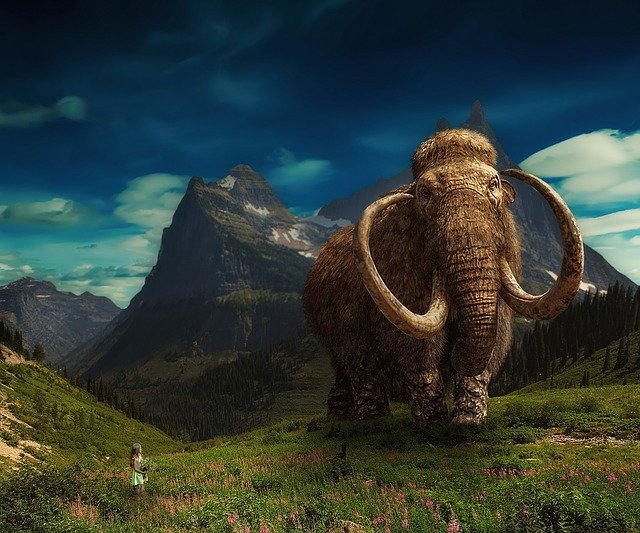
Adaptations and extinction of Woolly mammoths
Three lessons covering, adaptation, survival characteristics and the extinction of the woolly mammoth with comparison to living elephants. Includes presentation slides and student worksheet with answers. This resource is for teachers to use in sciences/IDL for Second (P5-P7).

Bees and Biodiversity (including STEM)
Three lessons on the contribution that bees make to our planet on the topics of pollination, bee diversity, and hexagons in the bee hive (STEM activity). This resource is for teachers, parents and carers to use in Sciences/maths for Second (P5-P7).

Outdoor Learning – using green space to feel good
An outdoor learning activity to promote the health benefits of using green spaces. It includes a visitor questionnaire, health diary and drawing and interpreting graphs. Two of the lessons are classroom-based, however the other lesson is an outdoor field trip that encourages the learners to put into practise what they have learned in the first lesson. This resource is for teachers, parents and carers to use in Science, Health and Welfare for Second / Third (P5 – S3).
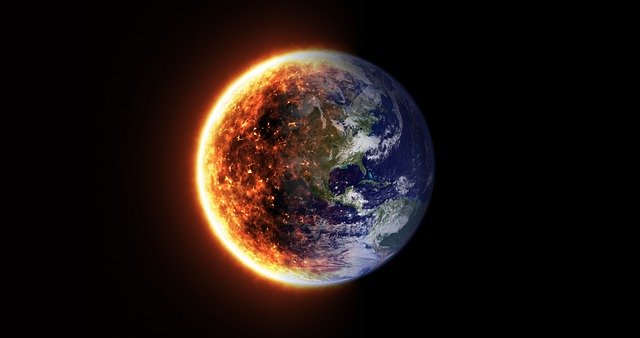
Climate change game
A card game to develop HOTS (Higher Order Thinking Skills) using climate change in the Alps. Learners discuss whether a fictional ski instructor should exchange his skis for bicycle wheels. Included in this guide is ‘Meet the Scientists’, about the real climate scientists. This resource is for teachers to use in Sciences/ languages (german) for Second / Third (P5 – S3).

Introduction to the Brain
This resource contains a workshop with activities about the structure and functions of the brain and what happens when it goes wrong. It also contains short biographies of the two co-authors and details of their academic involvement in psychology. It is intended for learners studying the Scottish National 5 Psychology curriculum. This resource is for teachers to use in Sciences, psychology for Third/Fourth/Senior.

Sea Level and Climate change
An eight-part project about sea level change since the ice age. Covers glaciation, global warming and isostasy. Includes lesson plans, presentations, workbooks and a template for a timeline poster to illustrate the content of the eight sessions. This resource is for teachers to use in Geography/sciences IDL for Third/Fourth.

Food Production and Insects
This resource is a set of 5 lesson plans with slides, an experiment (with worksheets for analysing the results) and assessment items. The target audience for this resource is for learners aged between 14 and 16 years. This resource is for teachers and learners to use in N4/5 Biology for SQA N4/5.

Attention and Advertising Tactics
Presentation with activities about different forms of advertising technique including inattentional blindness, change blindness and Pavlovian conditioning. It also contains short biographies of the two coauthors and details of their academic involvement in psychology. This resource is for Teachers/learners to use in Psychology, PSE for N4/5/Higher.

Prejudice Reduction Strategies
This resource is a presentation with activities about contact theory, the bystander effect and cognitive dissonance. It also contains short biographies of the two co-authors and details of their academic involvement in psychology. The target audience for this resource is learners studying the Scottish National 5 Psychology course (or equivalent). This resource is for teachers/learners to use in psychology, PSE for N4/5/Higher.

Cardiovascular Disease resource
Teacher and student resource pack covering the effects and causes of cardiovascular disease and medical methods for preventing it. This resource is for teachers/learners to use in Human Biology for Higher.

Guide to Drawing and Interpreting Graphs in Geosciences
A resource for pupils studying at SCQF Level 6-7, (Scottish Higher, AS-Level, and above) which details the use of graphs in the field of geoscience. May be of use to teachers of geography, the sciences or even as an application of mathematics. Of use for helping to achieve problem solving, data handling and scientific investigation learning outcomes. This resource is for Self guided learning for learners and teachers to use in Geography, Biology and any subject area using graphs for Higher.

Guide to Scientific Investigation in Geosciences
A resource for pupils studying at Higher, Advanced Higher (AS-Levels) and above which details scientific investigation and the methodology used in the field of geoscience. May be of use to teachers of geography and science (particularly biology). Of use for helping to achieve problem solving, data handling and scientific investigation learning outcomes. This resource is for Self guided learning for learners and teachers to use in Geography, Biology for Advanced Higher.

Guide to Descriptive Statistics in Geosciences
A resource for pupils studying at Advanced Higher (A2-Level, and above) which details the use of descriptive statistics in the field of geoscience. May be of use to teachers of geography, the sciences or even as an application in a mathematics or statistics course. Of use for helping to achieve problem solving, data handling and numeracy learning outcomes. This resource is for Self guided learning for learners and teachers to use in Geography, Biology for Advanced Higher.
Guide to Inferential Statistics in Geosciences
A resource for pupils studying at Advanced Higher (A Levels) and above, which details the use of inferential statistics in the field of geoscience. May be of use to teachers of geography, the sciences or even as an application in a mathematics or statistics course. Of use for helping to achieve problem solving, data handling and numeracy learning outcomes. This resource is for Self guided learning for learners and teachers to use in Geography, Biology for Advanced Higher.
Descriptive Statistics: Describing Data and Variables
A power point resource for teachers of biology, geography and environmental science for pupils studying at Advanced Higher (AS-Level, and above), and early FE/HE levels. Of use for helping to achieve a basic understanding of the different terms used to describe data and variables commonplace in literature on the internet. It complements the Geoscience Guides. This resource is for Self guided learning for learners and teachers to use in Geography, Biology, Data Science for Advanced Higher.